



Summary
Markets have repriced the easing path as inflation sensitivity rises alongside fiscal pressure and uncertainty around the Fed’s reaction function. The result is a higher-rate, higher-volatility environment, creating relative opportunities in segments with cleaner fundamentals, including select emerging markets.
Want a broader view of this quarter’s trends? Download the full market outlook for insights across the economy, fixed income, and private markets.
Our Perspective:
Coming into 2026, fixed income markets priced an easing glide path that extended through 2027. Inflation remained above the Fed’s 2% target, but the prevailing view was that disinflation would continue, allowing policy to gradually normalize.
That framing was challenged in Q1. Supply-side inflation risk, policy credibility risks, and fiscal-driven term premium now push investors to reassess not just when cuts arrive, but the level at which long-term rates ultimately settle.
Put simply, the rate story has become less about “when the Fed cuts” and more about how much compensation investors need to hold debt in a world where supply, credibility, and inflation volatility matter again.
IRAN WAR AND ENERGY SHOCK
The most immediate variable is the conflict involving Iran and its spillover into energy logistics. The International Energy Agency has described the disruption as among the most severe supply shocks in modern oil markets. With traffic through the Strait of Hormuz (an artery for roughly a fifth of global oil flows) constrained, energy and shipping costs have moved higher, and volatility has increased. Even with a quick resolution, disruptions to routing, insurance, and infrastructure can keep a risk premium embedded in prices for some time.
Energy is not the dominant weight in CPI or PCE, but it is a core input cost—arriving as businesses already navigate tariff-driven uncertainty. That combination matters. Higher energy costs can re-accelerate headline inflation and slow the descent of core inflation, keeping upward pressure on yields.
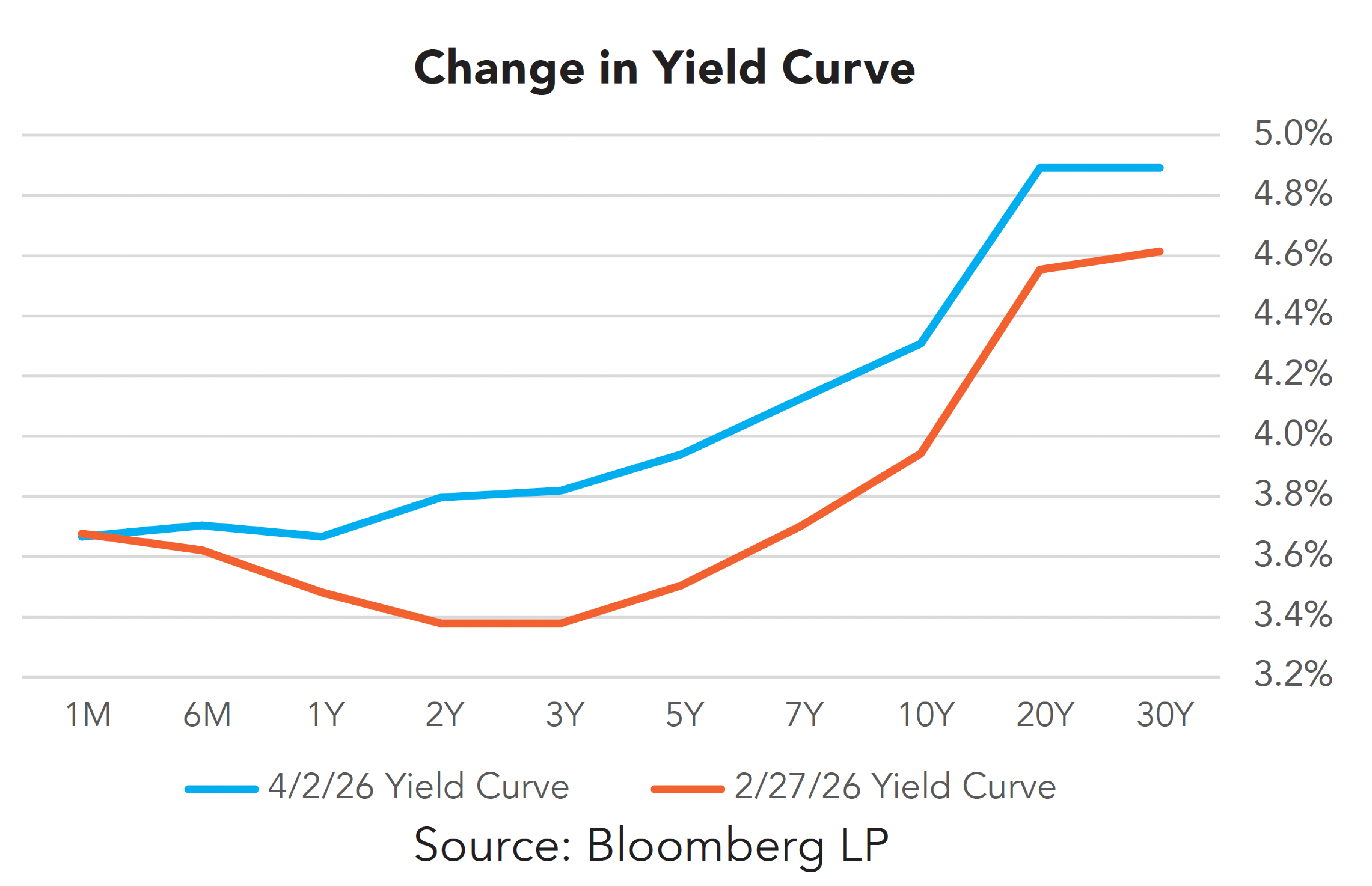
Supply shocks are the hard case for the Fed because its tools primarily influence demand. In that environment, “data-dependent” often becomes “wait-and-see,” and markets tend to do the repricing first—pushing volatility into rates and into Fed Funds expectations.
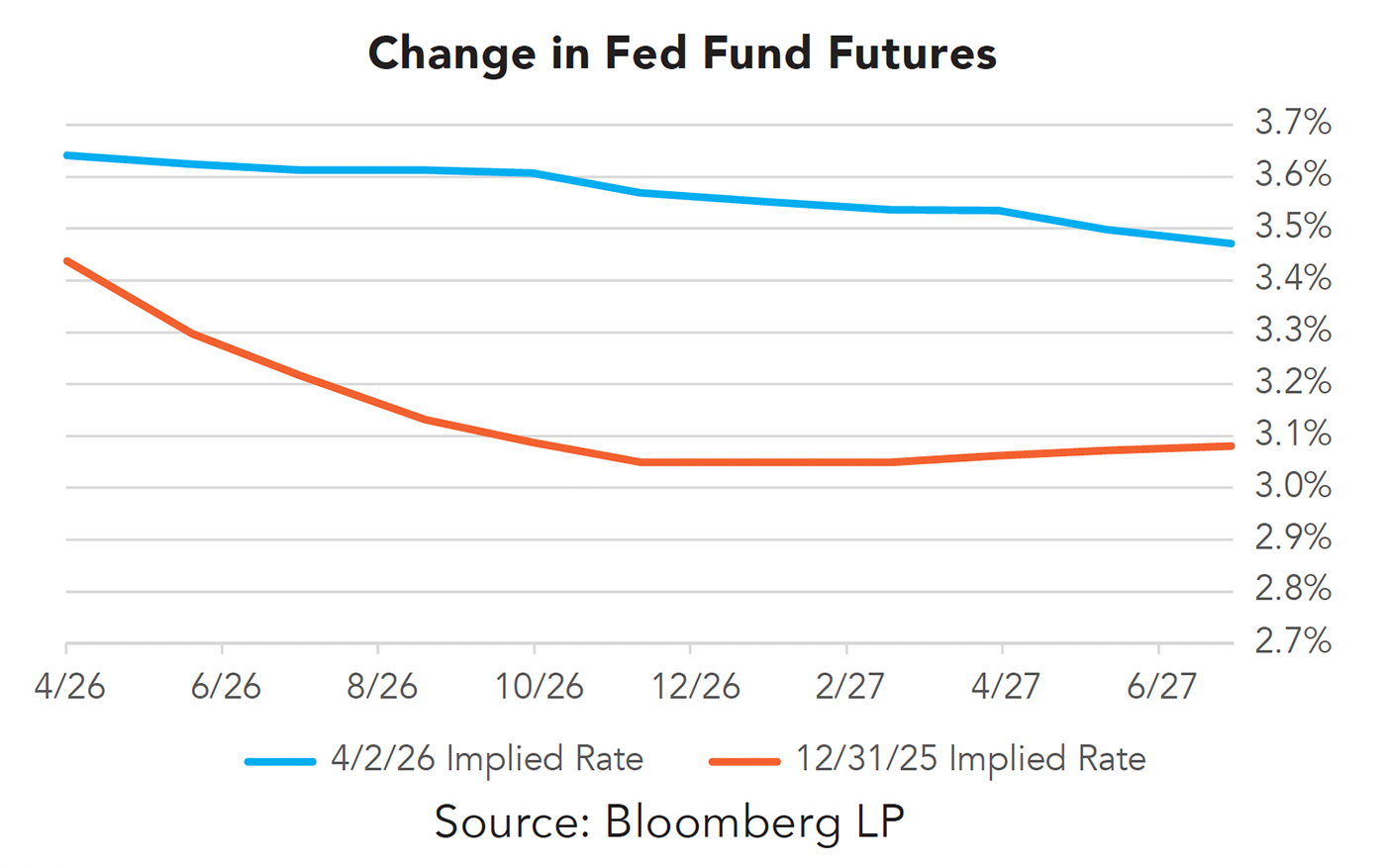
Energy is the near-term catalyst. The next question is whether markets can continue to anchor inflation expectations if credibility around policy becomes less stable.
FEDERAL RESERVE INDEPENDENCE
A second layer is policy credibility. Recent legal developments involving Federal Reserve Chair Jerome Powell and delays in the confirmation process for Kevin Warsh introduce the possibility that leadership uncertainty extends into the summer.
For markets, this matters less as politics and more as inflation psychology and reaction function. If credibility is perceived as weakening, investors demand a higher inflation risk premium. In other words, the risk isn’t just higher inflation; it’s less confidence in how inflation will be managed. That tends to show up as higher and more volatile long rates.
But even if credibility concerns fade, the structural pressure point remains: Treasury supply. That’s where term premium becomes the transmission mechanism.
FISCAL DOMINANCE AND TERM PREMIUM
Beyond inflation dynamics, fiscal math is increasingly pressuring rates higher. The One Big Beautiful Bill Act has extended tax cuts, and 2026 is the first full year of revenue impacts, implying heavier Treasury issuance. Layer on tariff rebates and the uncertain cost and duration of the Iran conflict, and borrowing needs may rise further.
At the same time, higher interest rates feed back into the long-term fiscal outlook through debt service. Rising servicing costs widen deficits, which require more issuance, which can keep yields elevated. This is fiscal dominance in practice: deficits and financing needs begin to shape the curve even as growth slows.
That combination—more supply, greater inflation sensitivity, and more questions about credibility—shows up in the term premium, the extra compensation investors require to hold long-duration Treasuries. Term premium was suppressed for years by balance sheet expansion. With the Fed now shrinking its balance sheet through Treasury runoff, it is no longer a large, price-insensitive buyer.
Private investors must absorb rising issuance amid an uncertain macro and fiscal backdrop and are demanding higher yields to do so. The practical effect is a higher-rate, higher-volatility regime where the “free” downside protection investors came to expect from duration may be less reliable.
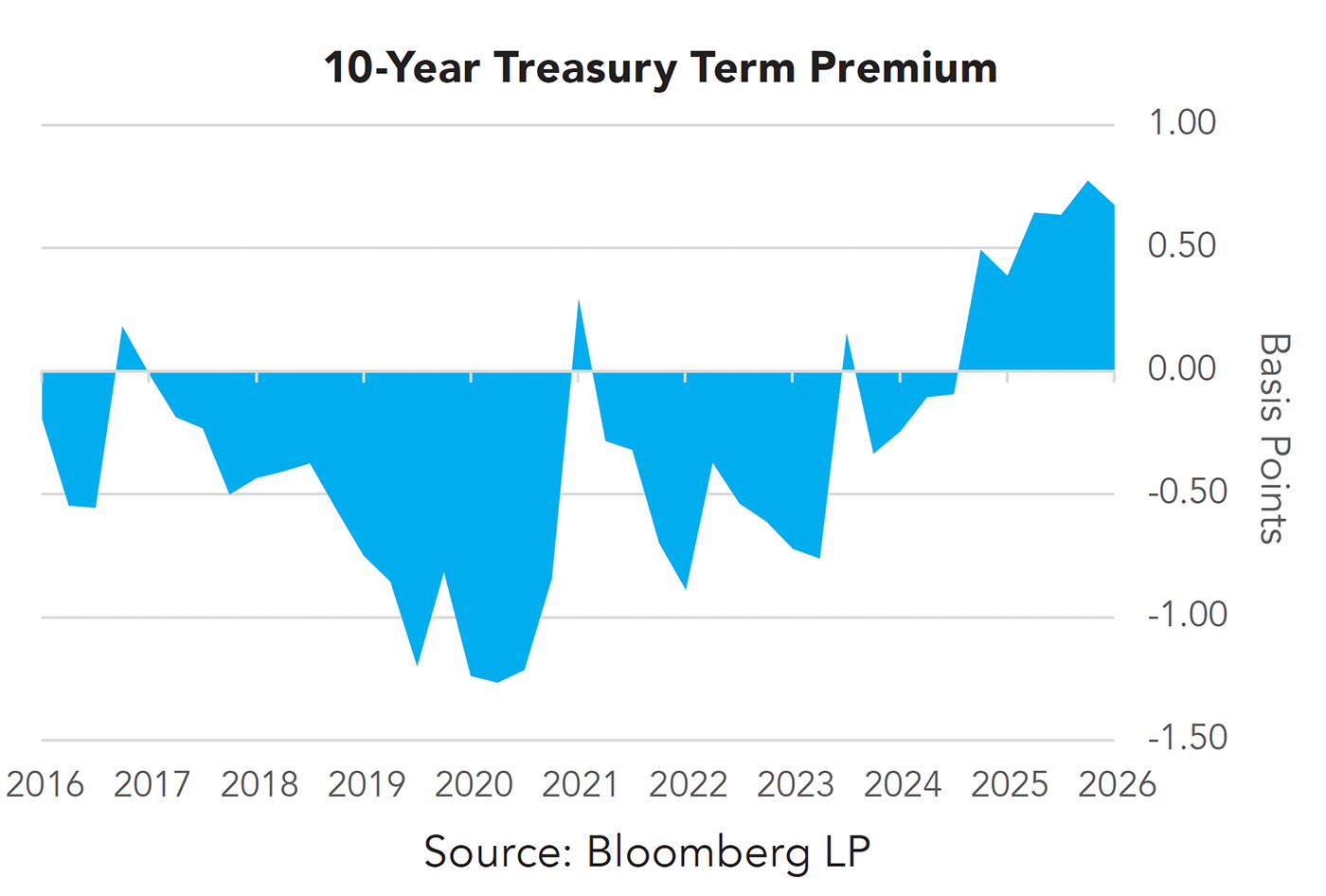
When term premium rises, diversification inside fixed income becomes more valuable—not just across issuers, but across fiscal regimes, inflation paths, and currency dynamics.
PORTFOLIO IMPLICATIONS
While the focus of this piece has been the U.S., similar dynamics are playing out across developed market (DM) economies, such as much of Europe and Japan. Heavier issuance and renewed inflation sensitivity can keep yields elevated and contribute to rate volatility. In this environment, core fixed income can still provide income and act as a ballast, but it may deliver less “crisis insurance” than investors are used to if term premium continues to rise, reinforcing the case for diversification within fixed income.
This makes a strong case for including emerging market (EM) fixed income. Beyond attractive yields, many EM economies exhibit several contrasting characteristics relative to developed markets, creating a compelling opportunity. In aggregate, EM countries tend to have lower debt burdens and comparatively healthier fiscal positions than their DM peers.
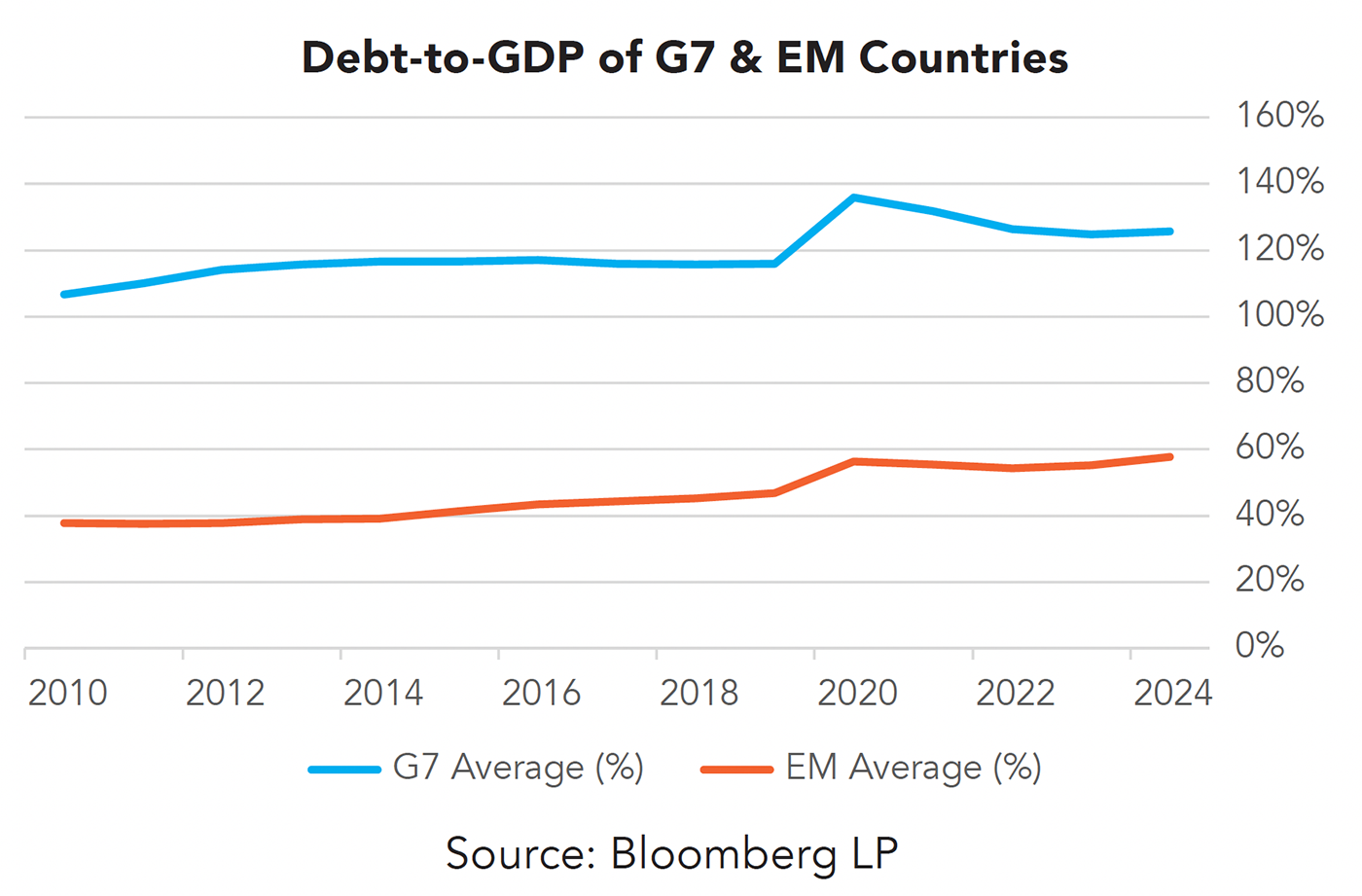
Many of these economies also have higher long-term growth potential, supporting tax revenues and debt sustainability over time. Currency dynamics also play an important role. While higher U.S. rates may support the dollar in the near term, persistent deficits and rising term premium can increase dollar volatility over time. In contrast, many EM central banks are further along in disinflation and easing, creating a more supportive environment for select EM currencies and potentially enhancing returns through currency appreciation.
Taken together, EM debt offers a mix of carry, potential capital appreciation, and diversification, particularly in countries with credible policy frameworks and stronger fiscal positions. As referenced in the Global Economy article, the Investment Team has recently established a position in EM debt within the public markets fixed income sleeve of our core strategies.
These evolving market dynamics may create new considerations for investors. Connect with a Midland Wealth Advisor.


